

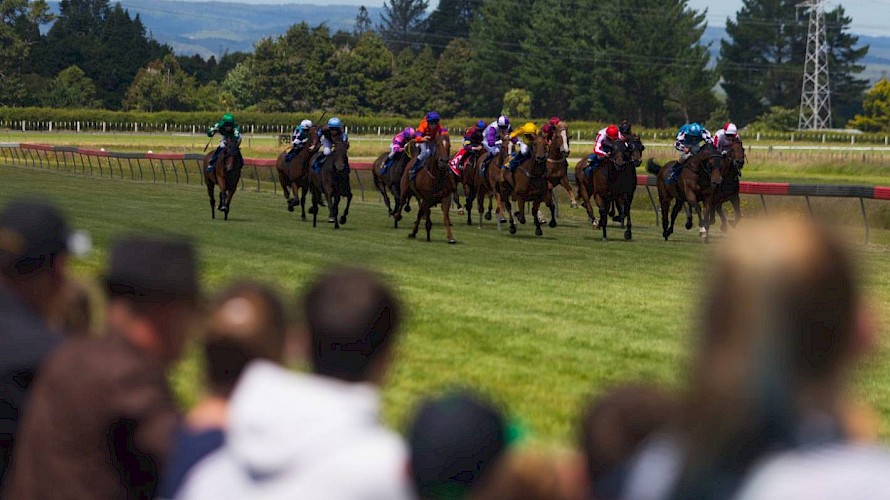
Some iconic meetings will be lost next season.
Racing gone at 14 venues next season and 43 fewer gallops and harness meetings proposed

By Barry Lichter • 15 May 2020
Racing will be lost at 14 venues next season in the draft set of racing dates released today.
And it is proposed that 43 fewer gallops and harness meetings will be held as the industry’s urgent overhaul continues.
Racing Industry Transition Agency executive chair Dean McKenzie says the racing calendar is a critical driver to enable the recovery of New Zealand racing and an essential part of the overall reform programme being led by RITA and the three racing codes.
“The leaders of New Zealand racing have repeatedly talked over decades about change but have not been courageous enough to address the critical need for venue intensification.
“Repeated reports on the industry, including most recently by John Messara, as well as the industry-led future venue plan, have identified that there were too many racing venues and this was a commercial drain on limited industry resources. Covid-19 leaves us with no other choice but to act.
“Over the last two years the codes have undertaken considerable work identifying their optimal future venue footprint. The impact of Covid-19 has created greater financial need to accelerate the implementation of the codes’ plans.”
A key principle of the proposed changes are more meetings closer to where the horse and greyhound population is trained.
“Ensuring meetings are located as close as possible, as often as possible, to where the horse and dog population is located will result in improved net returns to the industry,” McKenzie said.
“The racing calendar generates the revenue for the codes that ultimately end up in the stakes that drive domestic racing.
“The draft calendar means that some venues will miss out on racing licenses, and that is regrettable, but Covid-19 makes servicing almost 60 venues simply unsustainable and unappealing to the owners and participants who travel the length and breadth of New Zealand for meetings.
“With revenue likely to be further challenged next year we have to cut costs and deliver the most efficient programme of racing possible.”
Six synthetic dates
The draft calendar includes six meetings at the Cambridge synthetic track, which is being developed.
But while the Government announced on Tuesday funding for two more synthetic tracks at Awapuni and Riccarton they don’t feature in the calendar for 2020/21 as it is unlikely they will be built in time.
RITA dates chair Edward Rennell said the codes will consult with clubs who do not have licences allocated. Those clubs might race at alternative venues and retain their individual identities.
The codes will also review the dates allocation within regions to assess the possibility of holding partial dual meetings.
Rennell said the calendar also reflects uncertainty around attendance at meetings next year.
Consultation on the draft calendar closes on June 15 and it is expected a final calendar will be released on July 3.
 Bernard Saundry … everyone must take an industry-wide view.Parochial outlook has crippled action
New Zealand Thoroughbred Racing CEO Bernard Saundry said he understand there would be some people who found it difficult to accept that racing may no longer continue at their local venue.
“We also understand that an argument could be made for the survival of each individual venue, but where would that get us? At this time it is important everyone takes an industry-wide view and not consider venues in isolation.
“While most in the industry know we have too many venues a parochial outlook has crippled any serious action being taken to reduce them. COVID-19 has forced what countless Royal Commissions, and Ministerial Reviews, including the Messara review, have recommended,” Saundry said.
“Those clubs which may now find themselves racing at a different venue should take inspiration from Feilding and Beaumont. Both of these clubs have demonstrated that with relocation can come longevity and success at a host venue.”
Smaller pool of horses
The proposed number of gallops meetings in the draft calendar represents a 17% decrease since 2009 (from 328 to 273). During the same period there has been a 17% decline in individual starters, from 5826 to 4812.
The dwindling foal crop, which has dropped 28% since 2005, has resulted in a smaller pool of horses and even before COVID-19 the reduction in races was not keeping pace with the number of horses available to race.
Nationally the average field size has fallen from 11.12 to 10.49 in 2019 and will have declined further by the end of 2020.
Check out all the proposed race dates next season at the following link:
More news in Gallops
Fact-finding mission at Trentham next Saturday for Lightning fast Platinum Attack
Platinum Attack’s big chance - down in class and back to his favourite Trentham track
Finally a draw and Attack has flying Aussie Ben Thompson to get him across the line
Will Platinum Attack settle over 1400 metres in the BCD Sprint? Ear covers go on to help
Our runners this week: How our trainer rates them

Lisa’s comments
Saturday at Otaki
Race 3: Platinum Tyche
1:19pm
“I couldn’t be happier with her work and she has certainly improved from her first-up run when she did not have all favours. I don’t think it’s the strongest of fields and the forecast is looking good so I think she will get her chance to bounce back to winning form. Bruno Queiroz rides from gate four.”
Race 5: Platinum Attack
2:29pm
“He drew badly in 19 but they will start only 14 so he will come in to 13 or 14. The positive is there is good speed in the race with Shoes, Party Rocking and Idyllic who all go forward. I couldn’t be happier with him - his final work on Wednesday morning on the course proper was as strong as ever. He still has his summer coat and is looking fantastic. It’s a similar field to the one he beat last start at Trentham and Bruno Queiroz just needs to find some luck in the running.”